From the journal · October 28, 2026
Scoliosis in Children and Teenagers: Early Signs Every Parent Should Recognise
Scoliosis — an abnormal lateral curvature of the spine — affects approximately 2-3% of children and adolescents, making it one of the most common spinal conditions of childhood. The vast majority of cases are classified as adolescent idiopathic scoliosis (AIS), meaning the curvature develops during the growth spurt years without a clearly identifiable cause. Despite its prevalence, scoliosis remains significantly under-detected in Indian school populations, with many cases only being identified when the curvature has already progressed to a degree that limits treatment options.
Early detection changes outcomes fundamentally. A curve identified at 20 degrees in an 11-year-old with significant remaining skeletal growth can be managed conservatively. The same curve, left undetected until it reaches 40 degrees in a 14-year-old, may require surgical intervention. The window between detection and meaningful intervention is often measured in months — which is why parental awareness is as important as clinical screening.
Related reading: Surrogacy for Gay Parents: Legal Steps and Global Considerations · Modernising X-Ray Imaging with Digital Radiography Solutions
What Scoliosis Is and What It Is Not
Scoliosis is not simply poor posture, nor is it caused by poor posture. Children with scoliosis cannot straighten their curvature by standing up straight, however often they are told to do so. The curvature involves not only a lateral (side-to-side) deviation of the vertebrae but also a rotation of the vertebral bodies within the curve — a three-dimensional deformity that creates the characteristic asymmetries visible on physical examination.
Scoliosis is not caused by carrying heavy school bags, by sleeping on one side, or by any of the other lifestyle factors that parents commonly assume are responsible. Its causes are incompletely understood, though genetic factors clearly play a role — first-degree relatives of a person with AIS have a significantly elevated risk.
The Warning Signs Parents Should Know
Scoliosis is typically painless in its early stages, which is why children rarely report discomfort as an early symptom. The signs that prompt identification are almost always visual. Parents should be alert to:
- One shoulder visibly higher than the other when the child is standing relaxed
- One shoulder blade (scapula) that protrudes more prominently than the other, or sits at a different height
- One hip that appears higher or more prominent than the other
- Clothing that consistently hangs asymmetrically or a school shirt that never sits straight
- A visible asymmetry of the waistline — one side more curved than the other
- When bending forward (the Adam’s forward bend test): a hump or rib prominence on one side — this is the rotation component of scoliosis made visible and is one of the most reliable early signs
The Adam’s Forward Bend Test: A Home Screening Tool
The Adam’s forward bend test is the standard screening tool used by school nurses and paediatricians worldwide and can easily be performed by a parent at home. Have the child stand with feet together and bend forward at the waist, letting the arms hang freely. Look at the back from directly behind and from the side. Any asymmetry of the rib cage or lumbar region — a hump or raised area on one side — warrants professional assessment. A flat, symmetric back on forward bending is a strong negative predictor of significant scoliosis.
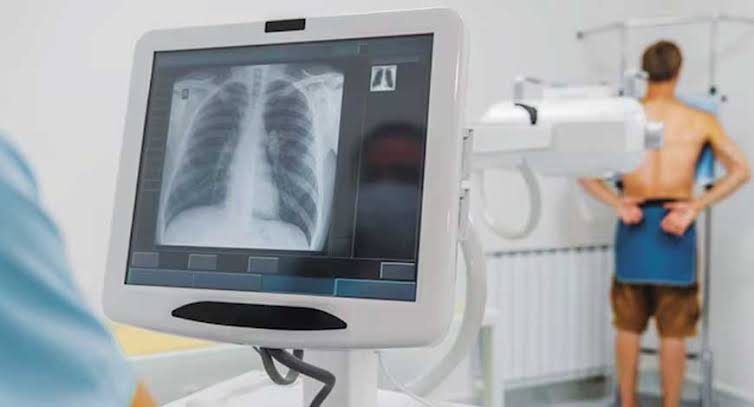
This test is not a diagnosis. It identifies children who warrant further evaluation, not those who definitively have scoliosis. Only clinical examination combined with a standing spinal X-ray can confirm the presence, degree, and location of a curvature.
What Happens After Diagnosis
Once scoliosis is confirmed on imaging, management depends on the degree of curvature (measured as the Cobb angle), the child’s skeletal maturity, and the rate of progression. General management principles:
- Curves under 20 degrees: typically observed with regular review (every 4-6 months during growth spurts) to monitor for progression; specific scoliosis exercises (Schroth method) are increasingly used to slow progression
- Curves 20-40 degrees in a growing child: bracing is the standard of care; evidence supports that high-compliance bracing reduces the risk of progression to surgery in a significant proportion of patients
- Curves over 40-50 degrees: typically referred for surgical consultation, though the decision to proceed depends on individual factors including rate of progression and patient and family preference
Non-Surgical Management: What It Involves
For children and adolescents in the observation and bracing stages, targeted physiotherapy using the Schroth method — a scoliosis-specific exercise system designed to actively reduce the curvature and stabilise it during growth — has accumulated significant evidence for slowing progression and in some cases producing meaningful curve reduction. These exercises work best when initiated early and practised with high consistency. The spinal specialists at ANSSI Wellness evaluate paediatric spinal presentations including scoliosis and can advise on the full range of non-surgical management options appropriate for each individual case.
Conclusion
Scoliosis detected early — when curves are small and growth is ongoing — is a condition that can almost always be managed without surgery when identified promptly and treated diligently. The difference between a good outcome and a surgical outcome is frequently a matter of months of earlier detection. Parents who learn to recognise the visual signs of scoliosis, and who act on those signs promptly, give their children the gift of earlier intervention and a substantially wider range of treatment options.